Shared by BRC embryologist Pei-Chun Liu:
Assisted-reproduction outcomes depend not only on egg quality but also closely on sperm quality. Many factors affect sperm quality — age, BMI, diet, the degree of DNA fragmentation, and the length of abstinence. Although abstinence length is well proven to affect semen parameters, its link to sperm quality is still often overlooked.
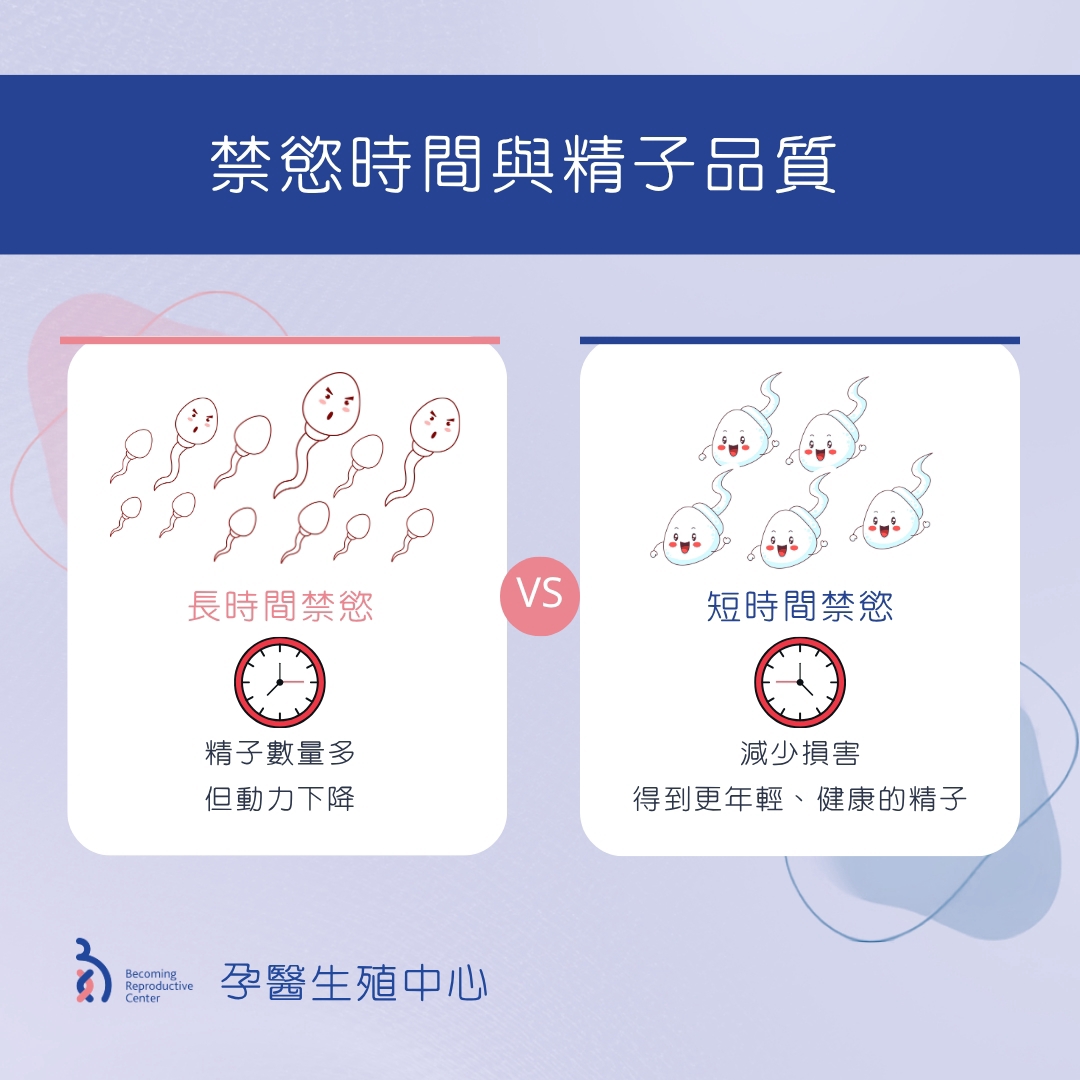
The WHO recommends collecting a sample for semen analysis after 2–7 days of abstinence. The literature reports that the longer the abstinence, the greater the semen volume and sperm concentration, yet the lower the motility. In recent years, several studies have compared different abstinence periods (<1 day, 2–3 days, 4–7 days, and >7 days) with respect to sperm parameters, DNA-fragmentation rate, the 2PN fertilization rate of blastocysts, post-transfer pregnancy rate, and live-birth rate. The results show that short abstinence (<3 days) yields a lower sperm concentration but higher motility, less DNA fragmentation, and a lower abnormal-fertilization rate — meaning better sperm quality.
Why is sperm quality linked to abstinence time? As sperm are produced and transported to the epididymis for storage, they are exposed to reactive oxygen species (ROS); prolonged exposure to excess ROS (oxidative stress) damages the sperm. So when the abstinence period is short, besides reducing oxidative-stress damage, it also reduces epigenetic modification of the sperm, changes in cytoplasmic ion concentrations (Na⁺, Ca²⁺) and pH, and shifts in semen composition — resulting in younger, healthier sperm!
BRC ㊗️ wishes your dreams come true!