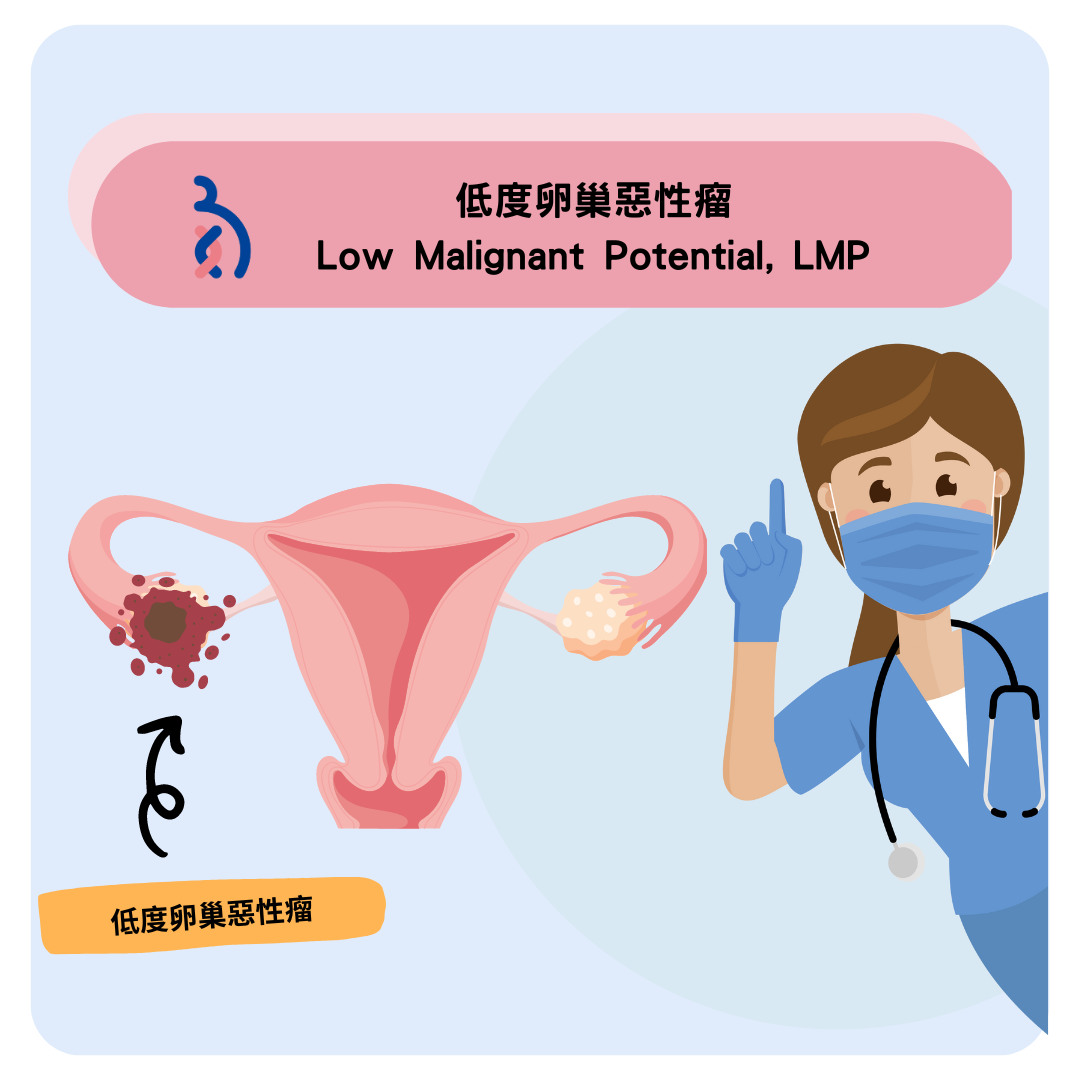
What Is a Low Malignant Potential Ovarian Tumor, LMP?
Low Malignant Potential Ovarian Tumor, LMP
BRCIVF nursing consultant Min-Feng Li shares:
A low malignant potential ovarian tumor, LMP, is an epithelial ovarian tumor that falls between benign and malignant.
It requires long-term monitoring and follow-up. However, if surgery or chemotherapy is needed, it may affect future fertility.
- 1.Causes of low malignant potential ovarian tumors, LMP
The exact cause remains unclear.
Known risk factors include women who have never been pregnant, women who give birth later or experience menopause later, patients who have had breast cancer, and those with a family history of ovarian cancer.
- 1.Symptoms of low malignant potential ovarian tumors, LMP
The most common symptom is abdominal bloating, often accompanied by gastrointestinal discomfort, such as lower abdominal discomfort, indigestion, nausea, and loss of appetite.
When the tumor becomes large enough to compress the intestines or bladder, it may cause constipation or frequent urination.
If it compresses nerves, it may cause lower back pain, abdominal pain, or sciatic nerve pain.
Therefore, if abdominal or gastrointestinal discomfort occurs and no clear cause can be found, a pelvic examination, abdominal ultrasound, or transvaginal ultrasound may be performed to establish a diagnosis.
- 1.Examination methods for low malignant potential ovarian tumors, LMP
- 2.Pelvic examination: gynecologic internal examination
- 3.Blood test: blood tests can be used to check tumor marker CA-125
- 4.Imaging examinations: commonly used imaging tests include ultrasound, computed tomography, CT, and magnetic resonance imaging, MRI
- 5.Treatment methods for low malignant potential ovarian tumors, LMP
- 6.Surgical removal:
This is the main treatment method. Laparoscopic surgery or open abdominal surgery is usually performed to remove the tumor tissue. - 7.Conservative surgery:
For young women who wish to preserve fertility, doctors may consider conservative surgery, removing only the tumor while preserving as much normal tissue and organs as possible. However, continued observation and monitoring are still required. - 8.Observation and monitoring:
For some localized and small low malignant potential ovarian tumors, doctors may recommend regular observation and monitoring to ensure that the tumor does not grow or worsen. Regular imaging and blood tests are usually required. - 9.Chemotherapy and radiation therapy:
These are not common in the treatment of low malignant potential ovarian tumors. After surgery, patients usually need regular follow-up evaluation and monitoring. Chemotherapy or radiation therapy may be performed when necessary. - 10.Possible effects of low malignant potential ovarian tumors, LMP, on future fertility
- 11.Impact on ovarian function:
If the tumor compresses or damages ovarian tissue, it may cause abnormal ovarian function, affecting egg release or hormone secretion, and therefore fertility. - 12.Impact of surgery on the ovaries:
If surgical removal is required, the surgery itself and the postoperative healing process may damage ovarian tissue, thereby affecting fertility. - 13.Impact on future infertility treatment:
If a patient requires surgery or chemotherapy because of a low malignant potential ovarian tumor, these treatments themselves may affect conception. For example, recovery may take time after surgery, while chemotherapy may have a permanent negative impact on ovarian function. - 14.Other factors:
Low malignant potential ovarian tumors can usually be monitored and followed up, but they may still transform into malignant tumors. If patients require long-term monitoring, this may create stress in their daily life and mental health, further increasing the risk of infertility.
Low malignant potential ovarian tumors, LMP, are a very challenging condition in obstetrics and gynecology.
This is especially true for young women of reproductive age, where a balance must be found between ovarian preservation and fertility needs.
Women who need ovarian surgery are advised to consult and discuss with both gynecologic oncology and reproductive medicine specialists.
By evaluating their ovarian function and future expectations, patients can make the best decision, plan ahead, and move closer to achieving their dream of having children.
BRCIVF wishes you good pregnancy luck!